
- Supernumerary Tooth Removal in Children: Causes, Symptoms, Treatment and What Parents Should Know
- Myobraces Treatment for Kids
- Root Canal Treatment in Kids: Causes, Procedures, and Aftercare
- Pediatric Orthodontics
- Special Care Dentistry
- Fluoride Treatment for Children
- Infant Oral Health Care
- Conscious Sedation
- Dental Surgical Procedures
- Myofunctional Appliance
- Dental Braces
- Dental Crowns
Supernumerary Tooth Removal in Children: Causes, Symptoms, Treatment and What Parents Should Know
Sometimes, a child may develop one or more extra teeth beyond the usual set. These additional teeth are called supernumerary teeth. While they may look harmless, they can affect the alignment of surrounding teeth, delay the eruption of permanent teeth, or create spaces where food and plaque can collect. Early evaluation by a Pediatric Dentist helps protect your child’s developing smile and prevents more complicated treatment later.
At Dr. Kammath’s Pediatric Dental Care in Trivandrum, children receive gentle, age-appropriate dental care focused on comfort, safety, and long-term oral health. If your child has an extra tooth or unusual tooth eruption, a timely assessment can make a significant difference.

What Is a Supernumerary Tooth?
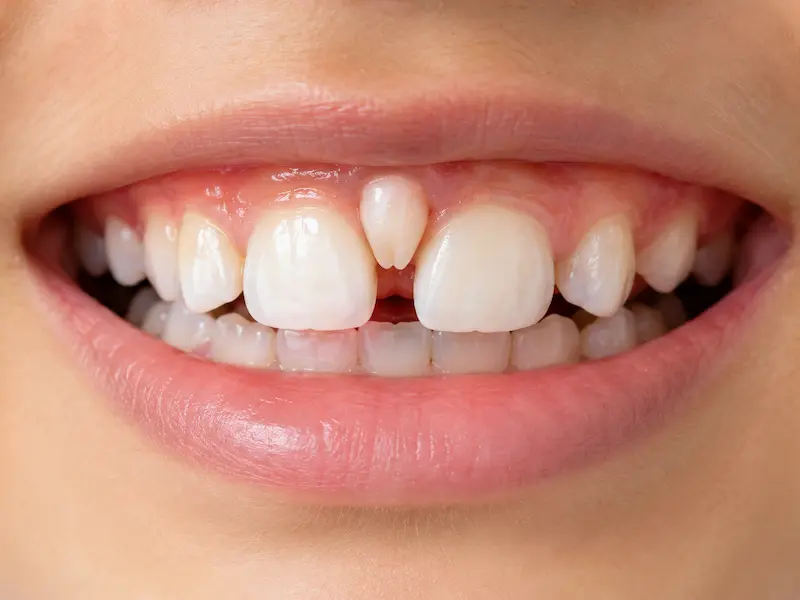
A supernumerary tooth is an extra tooth that develops in addition to the normal number of teeth. Children normally have 20 primary teeth and eventually 32 permanent teeth. An extra tooth may appear in the front of the mouth, near the back teeth, or remain hidden inside the jaw.
The most common type is a mesiodens, an extra tooth located between the two upper front teeth. Supernumerary teeth may be small and cone-shaped, resemble a normal tooth, or have an unusual shape. Some erupt through the gums into the mouth, while others remain trapped beneath the gum tissue and are detected only through dental X-rays.
Causes of Supernumerary Teeth in Children
The exact cause is not always known, but supernumerary teeth are believed to result from unusual activity in the dental lamina- the tissue responsible for tooth formation. Genetic and developmental factors may play a role.
Possible contributing factors include:
- A family history of extra teeth or dental developmental variations.
- Overactivity of the tooth-forming tissue during early childhood development.
- Certain genetic conditions, such as cleidocranial dysplasia or Gardner syndrome, though these are less common.
- Environmental or developmental influences during tooth formation.
Supernumerary teeth are more frequently seen in the upper front region of the mouth. Boys may be affected slightly more often than girls. Because the condition can run in families, parents who had extra teeth during childhood should mention this during their child’s dental visit.
Symptoms Parents May Notice
Not every supernumerary tooth causes obvious symptoms. Some are found unexpectedly during a routine dental examination or X-ray. However, parents should watch for the following signs:
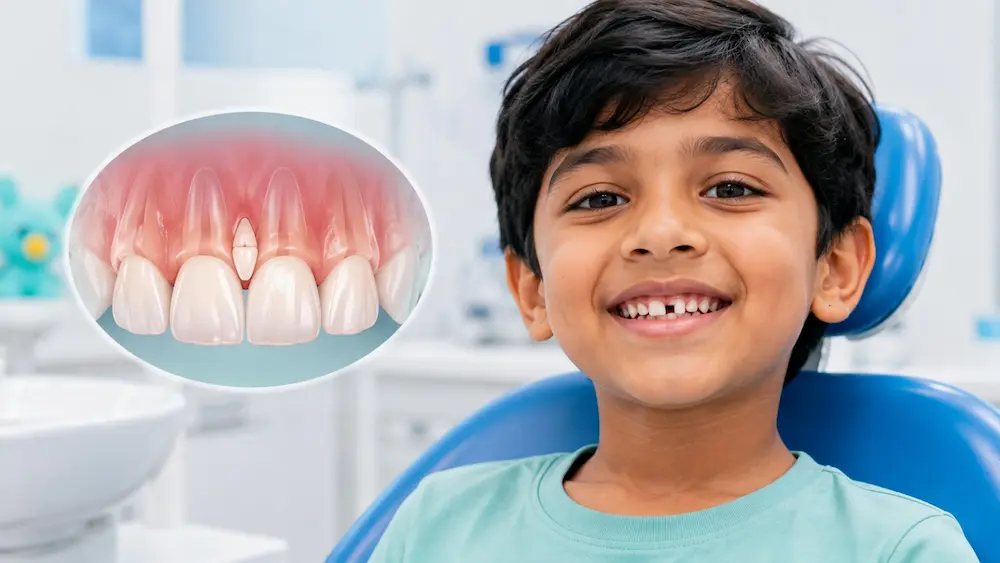
- An extra tooth visible between or beside the normal teeth.
- Crowding, twisting, or displacement of nearby teeth.
- A gap between the upper front teeth that does not close as expected.
- Delayed eruption of a permanent tooth.
- A permanent tooth erupting in an abnormal position.
- Swelling, discomfort, or tenderness in the gums.
- Difficulty cleaning between crowded teeth, increasing the risk of cavities and gum inflammation.
- Occasionally, pain or pressure if the extra tooth is impacted or affecting nearby structures.
If your child’s front teeth appear uneven, a permanent tooth has not erupted on time, or you notice an unusual extra tooth, schedule an evaluation with a Pediatric Dentist.
Why Tooth Removal in Children May Be Needed
Not every supernumerary tooth requires immediate removal. In some cases, if the tooth is not causing crowding, blocking eruption, or affecting oral hygiene, the dentist may monitor it with periodic X-rays. However, tooth removal in children is often recommended when the extra tooth can interfere with normal dental development.
Removal may be advised if the supernumerary tooth:
- Prevents or delays the eruption of a permanent tooth.
- Causes crowding or misalignment of surrounding teeth.
- Creates a gap between the front teeth.
- Increases the risk of tooth decay or gum problems.
- Causes pain, infection, cyst formation, or root damage.
- Interferes with orthodontic treatment or future bite alignment.
Early removal can help the permanent teeth erupt in a healthier position and may reduce the need for extensive orthodontic treatment later.
How Supernumerary Tooth Removal Is Done
Treatment begins with a detailed clinical examination and dental X-rays. The dentist assesses the tooth’s position, shape, root development, and its relationship with nearby permanent teeth. In some cases, advanced imaging may be recommended for accurate planning.
The removal procedure depends on whether the extra tooth has erupted or remains impacted:
- Erupted supernumerary tooth: If the tooth is visible in the mouth, it can often be removed through a simple extraction under local anesthesia.
- Impacted supernumerary tooth: If the tooth is buried in the jaw, a minor surgical procedure may be needed. The Pediatric Dentist carefully exposes and removes the tooth while protecting the developing permanent teeth.
- Sedation or behavior support: For anxious children, young children, or complex procedures, conscious sedation or other comfort measures may be considered to help the child remain calm and cooperative.
After removal, the dentist will provide clear aftercare instructions. These usually include soft foods for a short period, gentle brushing around the area, avoiding straws or vigorous rinsing initially, and using prescribed medication only as directed. Most children recover comfortably within a few days.
What Parents Should Know
Parents play a key role in identifying potential issues at an early stage. Regular dental check-ups, ideally every six months, allow the Pediatric Dentist to monitor tooth eruption and identify extra teeth before they cause problems. Dental X-rays are especially useful because impacted supernumerary teeth may not be visible in the mouth.
Do not attempt to remove or wiggle an extra tooth at home. Even if it appears loose, professional evaluation is essential to avoid injury to nearby teeth, gums, or developing tooth buds.
Gentle Pediatric Dental Care in Trivandrum
Supernumerary teeth are manageable when identified early. With Experienced Pediatric Dental Care in Trivandrum, children can receive safe, compassionate treatment designed around their comfort and developmental needs. Dr. Deepak D. Kammath brings more than 16 years of exclusive Pediatric Dentistry experience and follows a child-centered approach, using modern sterilization and comfort-focused technology.
If you suspect your child has an extra tooth, notice delayed tooth eruption, or have concerns about tooth removal in children, book a consultation at Dr. Kammath’s Pediatric Dental Care. Early guidance can help your child maintain a healthy, confident, and properly aligned smile.

