
Crossbite in Children: Causes, Signs and Treatment Options
Crossbite is one of the more common bite problems seen in children, yet parents often notice it only after it has affected the way their child chews, speaks, or smiles. The good news is that when identified early, a crossbite can usually be corrected comfortably with timely orthodontic or Pediatric Dental Care. If you are looking for an experienced Pediatric Dentist in Trivandrum, understanding the condition is the first step toward protecting your child’s developing smile.
At Dr. Kammath’s Pediatric Dental Care, children receive specialised dental attention in a calm, child-friendly environment. With more than 16 years of experience in Exclusive Pediatric Dentistry, Dr. Deepak D. Kammath focuses on gentle, preventive, and development-oriented dental care for children.
What Is Crossbite in Children?
A crossbite in children occurs when the upper teeth bite inside the lower teeth rather than slightly overlapping them. In a normal bite, the upper teeth should sit slightly over the lower teeth when the mouth is closed. When this relationship is reversed, one or more teeth may sit incorrectly toward the tongue or cheek side.
A crossbite can involve a single tooth, several teeth, or an entire section of the dental arch. A crossbite may affect the front teeth, the back teeth, or both. While it may look like a minor alignment issue, an untreated crossbite can influence jaw growth, tooth wear, gum health, and facial symmetry over time.
Children’s jaws are still growing, which makes early evaluation especially valuable. A Pediatric Dentist can identify subtle bite differences before they become more complex during adolescence.
Types and Causes of Crossbite
Crossbites are generally classified based on where they occur and which jaw is involved.
Anterior crossbite
This type of crossbite occurs when one or more upper front teeth sit behind the lower front teeth when biting. It may create an appearance similar to an underbite, although it can involve only a few teeth.
Posterior crossbite
This affects the back teeth. When the upper back teeth close inside the lower back teeth, it is called a posterior crossbite. It may occur on one side or both sides of the mouth.
Skeletal crossbite
This type is related to the size or position of the upper and lower jaws. For example, a narrow upper jaw may not align properly with the lower jaw, leading to a crossbite.
Dental crossbite
Here, the jaws may be reasonably well positioned, but individual teeth have erupted or shifted into an incorrect position.
Several factors can contribute to a crossbite in children:
- Genetics: Jaw size, tooth size, and facial growth patterns can run in families.
- Prolonged thumb sucking or pacifier use: Habits that continue beyond the early years can influence jaw and tooth development.
- Mouth breathing: Chronic nasal blockage or mouth breathing may affect the growth and positioning of the jaws.
- Tongue thrusting: Persistent forward tongue posture during swallowing can place pressure on developing teeth.
- Early or delayed loss of baby teeth: Space problems can cause permanent teeth to erupt in the wrong position.
- Crowding or missing teeth: Insufficient space in the dental arch can alter the way teeth meet.
- Jaw growth differences: A narrow upper jaw or uneven jaw development can contribute to the development of a crossbite.
Signs Your Child May Have a Crossbite
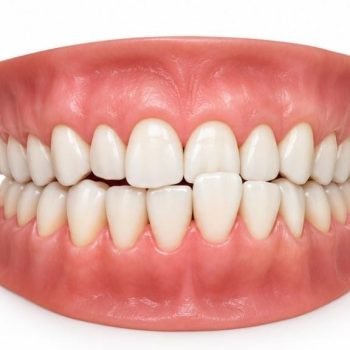
Parents may notice a crossbite while their child smiles, bites, or chews. Some signs may be easy to notice, while others may develop gradually over time.
Common signs include:
- Upper front teeth sitting behind lower front teeth when biting
- Upper back teeth closing inside the lower back teeth
- A shift of the lower jaw to one side when closing the mouth
- Asymmetry in the face or chin position
- Difficulty biting or chewing food comfortably
- Frequent cheek or tongue biting
- Uneven wear on teeth
- Jaw discomfort, clicking, or muscle tightness
- Speech difficulties in some children
- Mouth breathing or habitual open-mouth posture
Not every child will show all these signs. In some cases, the crossbite is visible only during a dental examination. This is why routine dental visits are important, even if your child has no obvious complaint.
How Is Crossbite Diagnosed?
A Pediatric Dentist diagnoses a crossbite through a detailed clinical examination of your child’s teeth, bite, jaws, and facial growth. The dentist will observe how the upper and lower teeth meet when your child bites down and whether the jaw shifts to compensate for the misalignment.
The evaluation may include:
- A complete dental and medical history
- Examination of baby teeth, permanent teeth, and bite alignment
- Assessment of jaw movement and facial symmetry
- Evaluation of oral habits such as thumb sucking or mouth breathing
- Dental X-rays, if required, to study tooth position and jaw development
- Photographs or dental impressions in selected cases
Early diagnosis matters because some crossbites are easier to correct while the jaws are still growing. A Pediatric Dentist can also distinguish between a simple tooth-position problem and a skeletal issue that may require orthodontic guidance.
Treatment Options for Crossbite in Children
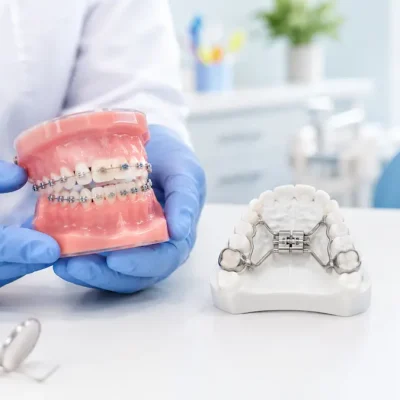
Treatment depends on your child’s age, the type of crossbite, the cause, and how much jaw growth remains. The aim is not only to align the teeth but also to support healthy jaw development.
Habit correction
If thumb sucking, prolonged pacifier use, tongue thrusting, or mouth breathing is contributing to the problem, addressing the habit is an important part of treatment. Pediatric Dentists can guide families with gentle, age-appropriate strategies.
Expanders
For a narrow upper jaw, a palatal expander may be recommended. This appliance gently widens the upper arch over time, allowing the upper and lower teeth to meet more correctly. Expansion is often most effective during childhood, when the jaw bones are more responsive.
Braces or aligners
In some children, braces, partial braces, or clear aligners may be used to move individual teeth into the correct position. The choice depends on the severity of the crossbite and the stage of dental development.
Tooth extraction or space management
If crowding, retained baby teeth, or loss of space is affecting tooth eruption, the dentist may recommend space maintenance, selective extraction, or other preventive measures.
Orthodontic treatment
More complex skeletal crossbites may require orthodontic treatment, sometimes in combination with growth guidance. In rare and severe cases, treatment may continue into adolescence or require specialist coordination.
Monitoring
Not every minor bite variation needs immediate intervention. In certain situations, the Pediatric Dentist may monitor your child’s growth and dental development at regular intervals before recommending treatment.
Why Early Treatment of Crossbite Is Important
Early treatment can prevent a small alignment issue from becoming a larger dental or jaw problem. Correcting a crossbite at the right time may help guide proper jaw growth, improve chewing efficiency, reduce abnormal tooth wear, and support a more balanced facial appearance.
Untreated crossbites can sometimes contribute to gum recession around affected teeth, uneven enamel wear, jaw strain, and functional difficulties. Addressing the issue early may also shorten or simplify later orthodontic treatment.
Regular dental check-ups allow a Pediatric Dentist to spot developing concerns before they become painful or complicated. If you suspect a crossbite in kids or notice that your child’s teeth do not meet normally, schedule an evaluation with a qualified Pediatric Dentist in Trivandrum.
At Dr. Kammath’s Pediatric Dental Care, the focus is on gentle, personalised care designed around each child’s comfort and developmental needs. Early guidance can help your child enjoy a healthier bite, a confident smile, and better long-term oral health.

